

Dublin's Old Medieval City Walls
Duration
2 hour(s)
Languages
English
Skip the line
Included
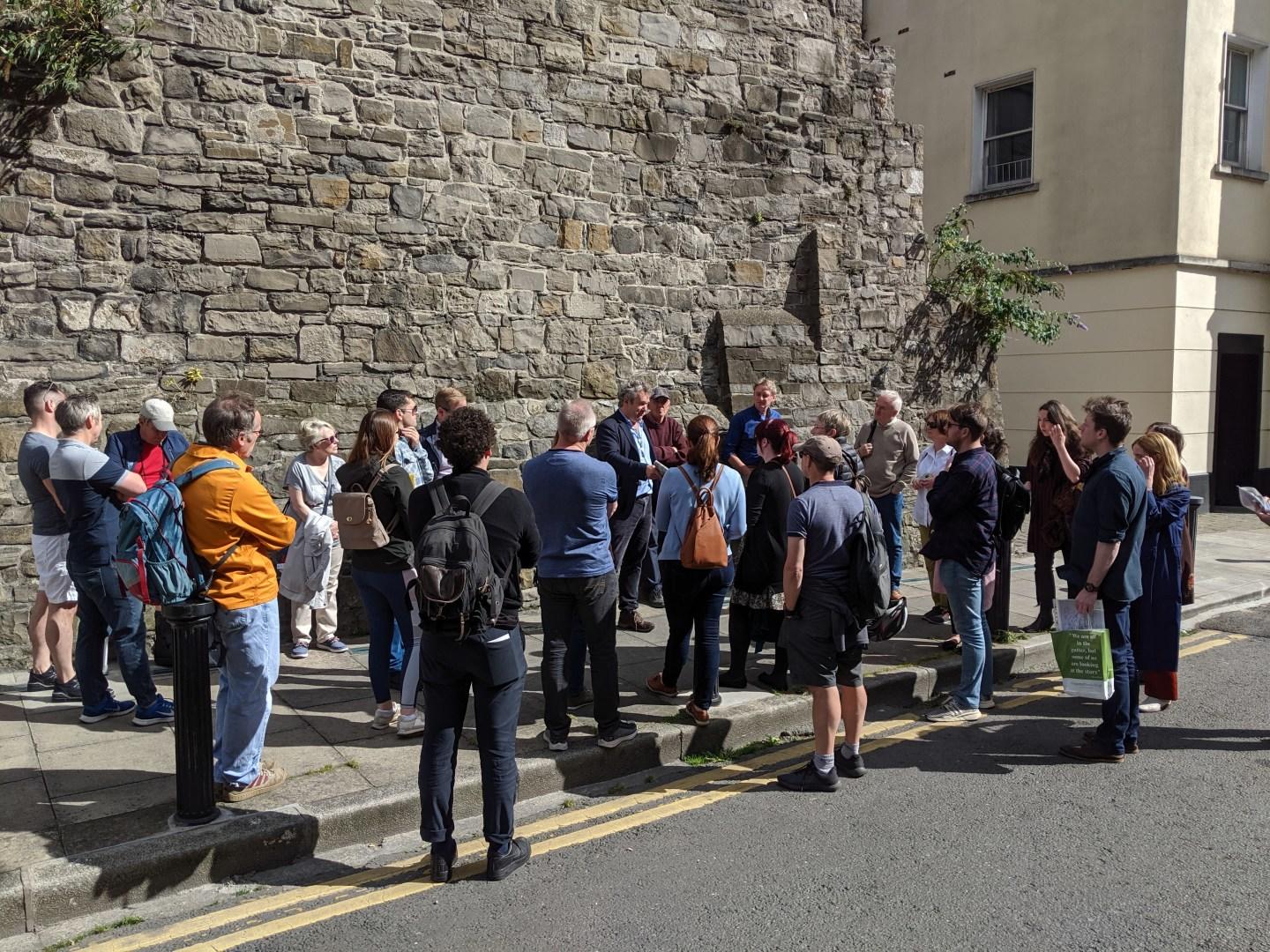
Explore the medieval walls of Dublin, both visible and hidden
Learn the history from Viking palisades to Anglo-Norman stone walls
Follow the wall’s route through castle walls, backstreets, and lanes
Discover towers, gates, bridges, and stories of fires, plague, and invasions
See how the walls shaped Dublin’s modern streets
Interactive experience with maps, clue-hunting, and historical storytelling
€ 265
Contact us 24x7


This activity is managed by our trusted partner FareHarbor.
Additional taxes and fees may apply — total shown at checkout.
Select Date & Time
Select your preferred date and time from the calendar above.
Reserve with peace of mind —
Enjoy unlimited changes and full refund options.
Exceptional flexibility
Free cancellation and unlimited rescheduling leads to total flexibility while you plan your travels
24/7/365 Customer support - When you need us we are here
Lowest Price Guarantee — no other provider offers this tour for less


Discover Dublin’s medieval walls on this immersive walking tour, exploring both their physical remnants and their story through history, maps, and fascinating tales.
Originally built as a wooden palisade by Viking founders in 841 and later reconstructed as thick stone walls by the Anglo-Normans, these walls shaped and protected the city for centuries, giving Dubliners a strong sense of place. Follow the route along castle walls, backstreets, and side lanes, spotting where the walls appear, disappear, and reappear, guided by maps, historic accounts, street names, and surviving clues in the cityscape.
Along the way, learn about towers, gates, prisons, bridges, fires, plague, invasions, and revolutions, and see how the walls influenced Dublin’s modern street plan. The tour begins outside the West door of City Hall on Cork Hill and takes you on a complete circuit of the ancient walls, visible or hidden.
This is an engaging and interactive experience—guests receive maps to trace the medieval walls through today’s streets, combining imagination, map-reading, navigation, and a touch of clue-hunting to bring Dublin’s history vividly to life.
Guided walking tour of Dublin’s medieval walls
Maps to trace the walls through the modern city
Stories of Viking and Anglo-Norman history
Insights into towers, gates, bridges, and city evolution
Interactive clue-hunting and map-reading experience
Food and drinks
Entry to paid attractions
Transport (walking tour only)
Personal expenses
Comfortable shoes
Sunglasses
Sun hat
Comfortable clothes
The tour is fully on foot; wear comfortable walking shoes
Starts outside the West door of City Hall on Cork Hill
The route covers backstreets and lanes; some areas may be uneven
Maps are provided for tracing the medieval walls through the city
Ideal for those interested in history, architecture, and interactive experiences
Food and drinks are not included; plan accordingly
The tour involves imagination, map-reading, and clue-hunting
Suitable for all ages, but children should be accompanied
Type in your hotel/accommodation to see how far the attraction or departure point is.
Loading pick up points...
Activity Provider: Dublin Decoded
Customer Reviews
Lonnie

A quiet marvel tucked into the heart of Dublin’s medieval soul. If you blink, you might miss it—but don’t. This surviving stretch of the Old Dublin City Wall at Cornmarket is one of the last standing witnesses to a city once hemmed in by stone, strategy, and centuries of change. Built in the 12th century, likely as part of the Anglo-Norman fortification efforts, this section near Lamb Alley marks the site of New Gate—one of seven original entrances into the walled city. It’s humbling to stand beside something that once protected Dyflinn, a Viking settlement that grew along the River Liffey. The original walls were made of earth and timber, but the Anglo-Normans reinforced them with stone, carving out a boundary that enclosed less than a square mile. Today, only fragments remain, and this one is a gem. There’s no flashy signage or tourist fanfare—just history, quietly enduring. If you’re the kind of traveler who finds magic in the mundane and meaning in the mortar, this spot is worth a detour. It’s a reminder that cities are layered, and sometimes the best stories are the ones still standing.
THE

We flew to Ireland to join a long bus tour of the island. Started in Dublin, then touring around the island and finishing in Dublin. A great trip to see both country and city. Walking around Dublin was easy using google maps and my research. I like the historic stuff so we found the old city wall, or what was left of it. Not much to see. Too bad most was torn down over the centuries.
oksana

The Old Town Wall on Black Lane in Dublin, Ireland. During the Middle Ages, Dublin was surrounded by a wall less than a square mile in area. The first fortifications of wood were built by the Ostmen, a group of Norse Gaels, in the 9th century. The defences were expanded, attacked and reinforced with stone over hundreds of years until they served their purpose in the 18th century. There were seven gates into the city. This section of the Anglo-Saxon wall on Lamb's Alley, probably built in the 12th century, was part of the New Gate. Only a few remnants of the walls remain in Dublin.
Paul

Unique bit of Dublin's medieval history. The other side of the Church has the only gate for the wall. Check that out too.
Austin

Dublin's Medieval over ground presence is there, if you know where to look. If you buy into the believe that there is nothing there you not not correct. So much of Dublins Medieval structures still remain, you just need to know where they are and what they look like! Note the Dublin City Medieval wall markers these are found all over the city and indicate surviving sections of old city. The City Council has also altered the colour of street pavements to show the line of the old walls. We have Cooke Street wall section and St Audeon's Gate, Lambe Alkeyy, Ship Street. But most importantly we have retained the medieval street sizes, you can still grasp the olde city. Plenty of olde Dublin still remains the fun is finding them and asking the right guides to show you.
