



8 hour(s)
English
Included
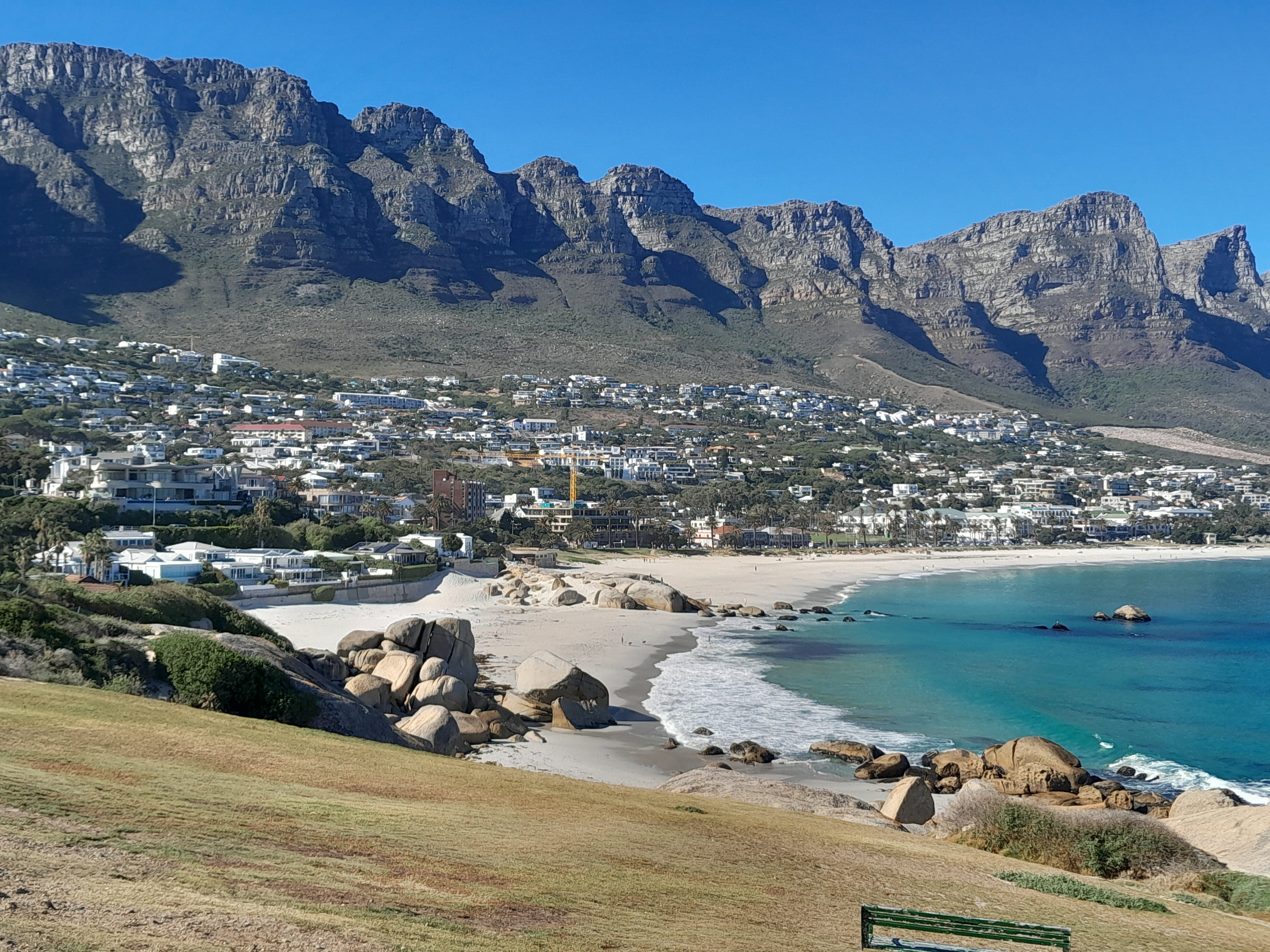
Discover the historical significance of Maiden’s Cove during apartheid
Continue the journey along the Cape Peninsula
Drive through Chapman’s Peak and Noordhoek Village
Explore the colorful houses and historical Nurul Islam Mosque
€ 225.44
€ 207.40


Free cancellation and unlimited rescheduling leads to total flexibility while you plan your travels
Lowest Price Guarantee — no other provider offers this tour for less


Our tour begins in the vibrant Cape Town city center, taking you first to the colorful neighborhood of Bo-Kaap, where you'll spend 20 minutes exploring its rich history and culture. Bo-Kaap, formerly known as the Malay Quarter, is set on the slopes of Signal Hill and is recognized as the heart of Cape Malay heritage. Once a racially segregated area during apartheid, it now stands as a symbol of resilience and cultural pride. The brightly painted houses, cobbled streets, and historical landmarks like the Nurul Islam Mosque—established in 1844—tell the story of a community that has preserved its traditions through generations.
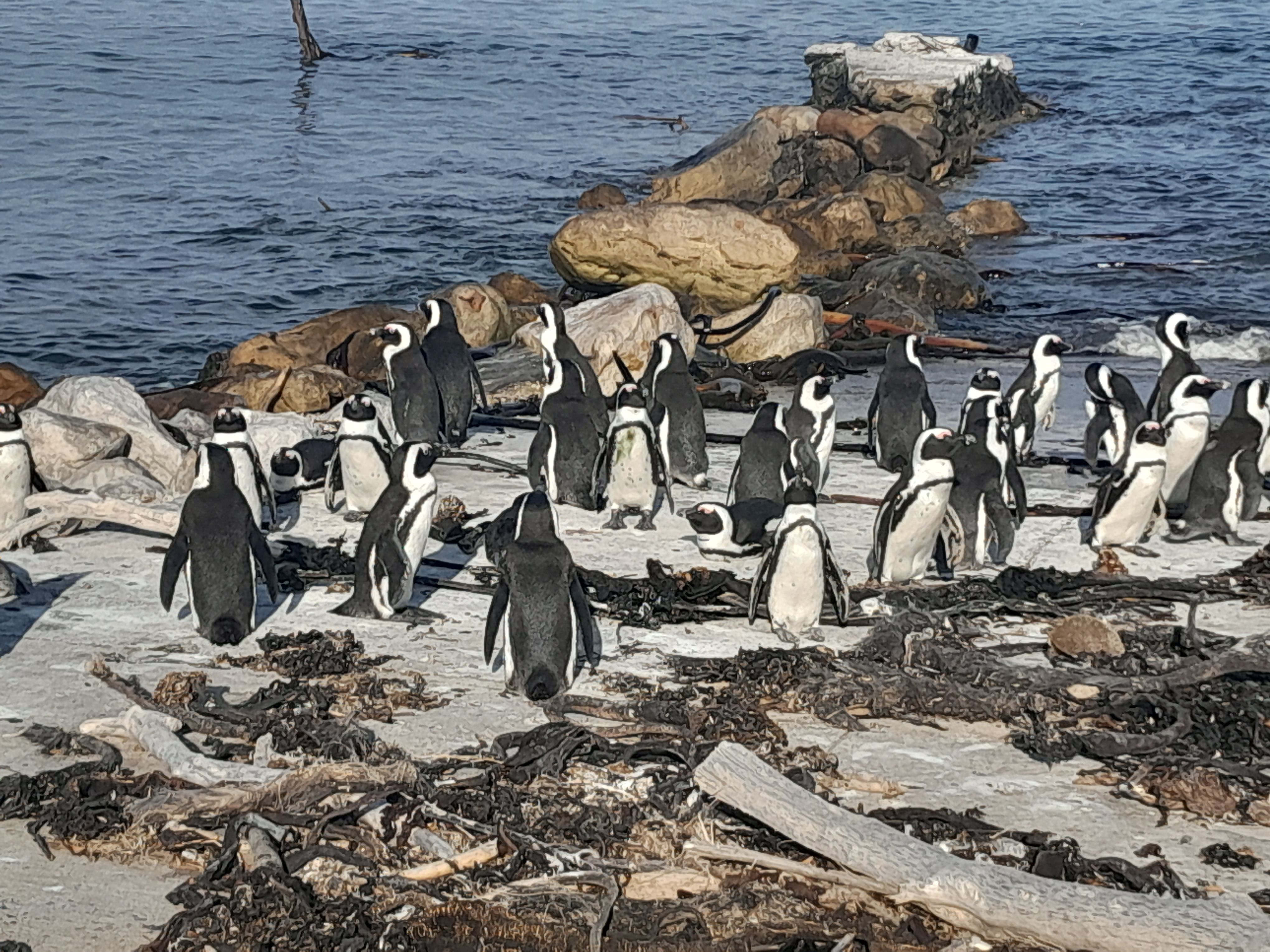
Next, the tour continues to Maiden’s Cove in Camps Bay, a scenic spot known not only for its breathtaking views of the Atlantic Ocean and Twelve Apostles mountains but also for its historical significance. During the apartheid era, Maiden’s Cove was one of the few beaches accessible to non-white residents of Cape Town, offering a rare space for relaxation and recreation in an otherwise segregated city. This peaceful coastal area stands today as a reminder of the past and a place where visitors can enjoy natural beauty and reflect on South Africa’s journey. From here, the adventure continues along the Cape Peninsula, passing Chapman’s Peak, Noordhoek Village, an ostrich farm, and on to iconic destinations like the Cape of Good Hope, Cape Point, Boulders Beach Penguin Colony, and Muizenberg.
Bus fare and Entrance tax
Fuel surcharge
Landing and facility fees
Goods and services tax
Meal and Beverage
National park entrance fee
Entrance fee and WiFi
Passport
Cash or credit card
A valid passport is required
Wheelchair accessible
Bring a water bottle to stay hydrated
Confirmation will be received at time of booking
Type in your hotel/accommodation to see how far the attraction or departure point is.
Loading pick up points...

Well the place isn't the prettiest in the world, but the whole area is cool. And if you are around cape town, this is a must visit and capture a picture of you with the sign. Simple as that. You might also see some (baby) Ostriches nearby.

My visit to the place was very beautiful. I saw the famous Cape of Good Hope point with the waves hitting the rocks and the clouds covering it. The view and the place were really beautiful and I hope to visit it again with my family and friends. It is a historical and heritage landmark that is worth visiting. I spent two hours contemplating the beauty of the place. I recommend visiting it and visiting the entire park, as you will find beauty everywhere on every path you take, with ostriches on the road and ibex running in the place.

The Cape of Good Hope, situated on the Atlantic coast of the Cape Peninsula in South Africa, marks the most south-western point of the African continent. For centuries it has been a place of both fear and fascination—known for its treacherous waters where the Atlantic and Indian Oceans converge, creating powerful currents, sudden storms, and unpredictable weather. Originally named the “Cape of Storms” by the Portuguese explorer Bartolomeu Dias in 1488, it represented one of the greatest challenges of early maritime exploration. Later renamed to the “Cape of Good Hope”, symbolizing the promise of a new sea route to the riches of the East—India and beyond. This renaming reflected optimism that the route would open unprecedented opportunities for trade and expansion during the Age of Discovery. Today, the Cape of Good Hope forms part of the Table Mountain National Park, renowned for its dramatic cliffs, rugged coastline, and rich biodiversity, including baboons, ostriches, and many bird species. It is located about 30 miles (48 kilometers) south of Cape Town, easily accessible for visitors who wish to experience both its natural beauty and its layered history. Two lighthouses stand sentinel here: the old lighthouse, built in 1859 at the summit of Cape Point, and the new lighthouse, constructed in 1919, located 162 meters lower near the tip of the promontory. The new one was built because the old lighthouse, though higher, was often obscured by fog and cloud cover, making it invisible to ships in peril. From the car parking, where you can find souvenir shops, you can take a cable car up to the old lighthouse or you can also walk (about 20 minutes). Visiting the Cape is more than a scenic outing—it is a journey through time. Its cliffs and windswept shores recall the daring of explorers who risked everything to expand the world’s horizons. A trip to the Cape of Good Hope is indeed worth every moment, offering panoramic views, natural wonders, and a deep connection to one of the great turning points of global history.

Lovely day trip. We started at boulders beach to see the penguins, headed to Cap of good hope and ended at the two oceans light house. We took the furnicular ride as well. Tickets here readily available and reasonably priced. The views were breathtaking. We hiked up the mountain at Cap of good Hope which was rewarded with extraordinary views. Highly recommended.

Absolutely breathtaking! 🌊 The Cape of Good Hope is a must-visit — stunning ocean views, dramatic cliffs, and the fresh sea breeze make it unforgettable. The scenery feels like something out of a postcard, even on a cloudy day. Highly recommend bringing a camera and just soaking in the natural beauty!


